Gut Science Blog
Pasteurized Akkermansia: Why The "Dead" Form Still Supports Your Gut
A clear-eyed look at pasteurized *Akkermansia muciniphila*, the heat-stable Amuc_1100 protein, the Akk11 strain, and what the research actually shows about benefits, safety, and how to choose a supplement.


by The Superlab Co. - Science Team •
When most people pick up a probiotic, they are looking for one thing: live bacteria. Billions of them, ideally still kicking when the capsule reaches the gut. It is a reasonable assumption. For twenty years, that is exactly how the entire category has been sold, measured in colony-forming units, refrigerated where possible, marketed on the promise of delivering live cells to a living ecosystem.
For Akkermansia muciniphila, that assumption needs an asterisk.
The mechanistic paper that launched the field identified a specific outer-membrane protein, not the living bacterium itself, as the active piece. The first human trial of the ingredient used the pasteurized form. And the regulatory science community has since formalized a whole new category, the postbiotic, in part to describe exactly this kind of preparation. Pasteurized Akkermansia is no longer a workaround. It is a deliberately inactivated, well-characterized form of the ingredient with its own mechanism, its own human safety data, and its own practical advantages.
This is the part of the story most shoppers have never been told. Here is what the science actually says, and how to read a label once you understand it.
The ‘live probiotic’ assumption (and why Akkermansia needs an asterisk)
The classic probiotic playbook was built around lactobacilli and bifidobacteria, sturdy, fermentation-friendly bacteria that have been studied for over a century. They tolerate oxygen reasonably well. They survive (some of) the stomach. They can be freeze-dried and shipped without too much drama. The dominant question for those organisms is straightforward: how many live cells reach the colon?
Akkermansia muciniphila is a different kind of microbe entirely. It is a strict anaerobe, which means it dies on contact with oxygen. It lives almost exclusively in the inner mucus layer of the gut, where it uses mucin as its primary carbon and nitrogen source. That is where its name comes from: muciniphila means ‘mucus-loving.’ It was only first isolated in 2004, and it took researchers another decade to figure out how to cultivate it consistently in a lab. Today it is recognized as part of the normal, healthy human gut microbiota, where it typically accounts for somewhere between half a percent and a few percent of all the bacteria present.
When scientists began testing Akkermansia in people, they ran into a practical problem: live anaerobic bacteria are difficult to manufacture, ship, and shelve. But they also ran into a more interesting scientific problem. What if the living bacterium was not actually the active ingredient? What if the molecule doing the work was a structural piece of the bacterium that did not need to be alive at all?
That question, and the answer that followed, is what made Akkermansia the founding ingredient of the postbiotic category.
What pasteurization actually does to Akkermansia
Pasteurization, in this context, is precise. The method most often cited in the literature comes from the 2017 paper that put pasteurized Akkermansia on the map: heating the bacterial suspension at 70°C for 30 minutes. The process inactivates the cells, so they can no longer divide or colonize, but it preserves the structural components of the bacterial envelope.
You can think of it as turning a living organism into a stable biological preparation. The cells do not disappear. Their outer membrane, their surface proteins, and their internal components remain intact. What changes is their viability.
In 2021, the International Scientific Association for Probiotics and Prebiotics (ISAPP) published a consensus definition for this kind of preparation. They called it a postbiotic: a preparation of inanimate microorganisms and/or their components that confers a health benefit on the host. Pasteurized Akkermansia is one of the most-studied examples that fits this definition.
The shift in terminology is more than semantic. It reflects a real shift in how the scientific community thinks about microbial health benefits: not always ‘deliver a living organism,’ but sometimes ‘deliver the specific molecule that the host responds to.’ For Akkermansia, that molecule turned out to be a surface protein called Amuc_1100.
What if the molecule doing the work was a structural piece of the bacterium that did not need to be alive at all?
§ 03 · The active pieceThe Amuc_1100 protein: the active piece that survives the heat
In 2017, a research team led by Hubert Plovier published a landmark paper in Nature Medicine. They were chasing a focused question: what part of Akkermansia muciniphila is actually responsible for the gut-barrier effects observed in earlier animal studies?
What they found was Amuc_1100, an outer-membrane protein that sits on the surface of the Akkermansia cell. In mouse models, they showed that Amuc_1100, either as part of the pasteurized bacterium or as a purified protein on its own, was enough to interact with TLR2 receptors on the intestinal lining and to support gut barrier integrity.
Two details about Amuc_1100 are worth pausing on. First, it sits on the outside of the bacterium, which means it can interact directly with the cells of the gut lining without the bacterium needing to be alive, active, or even intact. Second, it is heat-stable. The same 70°C pasteurization that inactivates the cell leaves Amuc_1100 functionally intact.
This is the molecular reason pasteurized Akkermansia makes sense. The ‘business end’ of the bacterium, the surface protein that the gut lining responds to, survives the process that kills the cell. You are not delivering live bacteria and hoping they reach the right neighborhood. You are delivering the bioactive molecule directly, on a heat-stable, shelf-stable preparation. Independent groups have since converged on the same machinery: the activity traces to a small gene cluster (Amuc_1098 to Amuc_1102) surrounding Amuc_1100, and to that protein’s interaction with TLR2 at the intestinal barrier.
What the research shows: Plovier, Depommier, and the Akk11 studies
The Plovier 2017 paper was mechanistic. It laid out the biology in mice and in cell culture. Two years later, the same research group at UCLouvain published the first randomized, placebo-controlled human trial of Akkermansia muciniphila, again in Nature Medicine. The principal investigator was Clara Depommier.
The Depommier 2019 study followed adults over three months, comparing placebo, live Akkermansia, and pasteurized Akkermansia at a daily dose of 10 billion (1010) cells. The headline result that matters for a supplement shopper is a simple one: supplementation was safe and well tolerated across the three-month period, with no significant safety signals. It was a proof-of-concept human study, and what it proved first was feasibility and tolerability, the foundation everything else is built on.
For the gut barrier mechanism itself, the strongest signals remain preclinical, and it is worth being honest about that. The barrier-integrity work, the goblet cells, the mucus layer, the tight junction proteins, comes from animal and cell-culture models, where the picture is consistent and mechanistically coherent.
A 2025 study in Frontiers in Microbiology by Feng and colleagues is a good example, and it is one of the few that tested the Akk11 strain specifically. Working in mice, the researchers compared live and pasteurized Akk11 and found that both forms increased the number of goblet cells in the colon, improved mucosal integrity, and enhanced the expression of tight junction proteins, the proteins that hold the cells of the gut lining tightly together. Notably, the pasteurized form showed an even greater enhancement of tight junction proteins than the live form, and it increased the relative abundance of Akkermansia in the gut. These are animal findings, not human outcomes, and they should be read that way. But they line up cleanly with the Amuc_1100 mechanism, and they undercut the intuition that a non-viable preparation must be the weaker option.
Here is the honest summary of the live-versus-pasteurized question: it is not fully settled, and it probably will not resolve into a single tidy winner. Different strains, different preparations, and different outcomes can favor one form or the other. What can be said cleanly is that pasteurized Akkermansia is no longer the consolation prize. It is an evidence-backed form of the ingredient, with a defined and heat-stable active component in Amuc_1100, direct human safety data, and consistent preclinical support for the gut barrier. ‘Dead’ is not a downgrade. It is a different, and in several practical ways more dependable, way to deliver the same surface biology.
The Akk11 strain, specifically
If you have been comparing products, you have probably seen the strain name Akk11 (sometimes written Akkermansia Akk11). It is worth understanding what that label actually means, because strain is one of the few places where ‘Akkermansia muciniphila’ stops being a generic species name and starts being a specific, sequenced organism.
Akkermansia muciniphila is the species. Most of the foundational research, including the EFSA-assessed material discussed below, was done on the type strain, MucT (also catalogued as ATCC BAA-835). Akk11 is a separate, more recently characterized strain that was isolated from the feces of healthy infants. Different strains of the same species can behave differently, so strain-level work is not a formality. It is the difference between ‘we used some Akkermansia’ and ‘we used this specific, genome-sequenced, safety-evaluated Akkermansia.’
Akk11 has been put through that kind of strain-specific work. A 2025 safety evaluation in Food Science & Nutrition ran Akk11 through a comprehensive genotypic, phenotypic, and toxicological assessment, structured around FDA GRAS, USP, EFSA, and WHO/FAO guidelines. The short version: the strain showed strong tolerance to simulated gastrointestinal stress, no cytotoxicity, and no harmful biochemical activities, and the animal toxicology studies found no adverse effects even at the highest doses tested over 90 days of daily oral administration. That is the kind of dossier a serious next-generation ingredient is expected to have, and it is a reasonable thing to look for behind any strain name on a label.
Akkermansia benefits: what the research is actually exploring
It is easy to find sweeping promises attached to Akkermansia. It is more useful to know what the research is genuinely exploring, in language that respects what has and has not been shown. Within the bounds of structure and function support for a healthy gut, here is the honest map of Akkermansia benefits.
Gut lining and barrier support. This is the best-characterized area and the reason the ingredient exists in the form it does. The Amuc_1100 protein interacts with the intestinal lining through TLR2, and across preclinical models, Akkermansia preparations support markers of gut barrier integrity such as mucus production, goblet cell numbers, and tight junction proteins. In plain terms, the research centers on helping the gut lining do its normal job of staying a well-organized, intact barrier.
Microbial balance. Akkermansia is a normal resident of a healthy gut, and it sits at an interesting crossroads of the microbiome. Feeding on the mucus layer, it participates in a web of cross-feeding with other beneficial microbes. Some preclinical work shows that supplementing the pasteurized form can shift the surrounding microbial community in favorable directions and support the production of short-chain fatty acids like butyrate. The throughline is microbial balance: supporting a gut environment where beneficial organisms can do well.
Everyday digestive comfort. This is the most relatable benefit and the hardest to over-claim, so we will keep it grounded. A gut lining that is well-supported and a microbial community that is in balance are the substrate for the kind of everyday digestive comfort and regularity that most people actually care about. That is the experience the ingredient is built around, and it is the right level at which to set expectations.
None of this is a treatment for anything. Akkermansia is a food ingredient that supports the normal structure and function of a healthy gut, and that is exactly the frame to keep it in.
Akkermansia side effects and safety: what we know
For a relatively new ingredient, Akkermansia muciniphila has accumulated an unusually thorough safety record, especially in its pasteurized form. If you are searching for Akkermansia side effects, this is the context worth having.
Start with what the organism is. Regulators describe A. muciniphila as a well-characterized, non-toxin-producing, avirulent microorganism that is a normal part of the healthy human gut microbiota. In other words, it is not a foreign invader. It is something a healthy gut already contains.
On the formal safety side, the pasteurized form has been assessed by serious bodies. In 2021, the European Food Safety Authority (EFSA) concluded that pasteurized A. muciniphila is safe for use as a novel food at the proposed conditions of use, and in 2022 the European Union authorized it for sale. EFSA later extended that assessment, and in 2024 the UK’s Food Standards Agency and Food Standards Scotland independently completed their own risk assessment and concluded that pasteurized A. muciniphila is safe for the general population aged 12 and over at doses up to 40 billion cells per day. On the strain side, the Akk11 toxicology work described above found no adverse effects in animal studies even at the highest doses tested over 90 days. And in the human setting, the three-month Depommier trial reported that supplementation was safe and well tolerated.
What about real-world side effects? The honest answer is that the documented safety profile is strong, and serious adverse effects have not been a feature of the published record. As with introducing any new supplement to your routine, some people simply prefer to give their system a little time to adjust when starting something new. The pasteurized, non-viable form also has a specific practical appeal here: because it does not rely on live bacteria establishing themselves, it sidesteps the small theoretical concerns that live organisms can raise for people with compromised immune systems.
As always, this is general information, not medical advice. If you are pregnant or nursing, are immunocompromised, or are managing a health condition or taking medication, it is sensible to talk with your healthcare provider before adding any new supplement, Akkermansia included.
Shelf-life reality: why live anaerobic bacteria are hard
This is where the practical story catches up with the scientific one.
Akkermansia muciniphila is, by its biology, an obligate anaerobe. It cannot tolerate sustained oxygen exposure. In a research lab, scientists work with Akkermansia inside anaerobic chambers, sealed environments flushed with nitrogen, hydrogen, and carbon dioxide, because even brief exposure to ambient air is enough to compromise viability.
That biology does not change once the bacterium is bottled. Live Akkermansia products require unusually careful handling: oxygen-impermeable packaging, controlled fill conditions, often refrigerated transport, and refrigerated storage. Even with all of that, the viable cell count in any live anaerobic product is a moving target. It declines over time, faster at warmer temperatures, faster still if the seal is compromised. That is why some live Akkermansia products carry refrigeration instructions and shorter use-by windows than a typical supplement.
Pasteurized Akkermansia sidesteps the problem. You are not relying on the bacterium to be alive when it reaches the gut. You are relying on the heat-stable surface molecules, Amuc_1100 most importantly, plus other membrane components, to be present at the dose listed on the label. That is a far easier promise to keep across a supply chain that includes a manufacturing facility, a warehouse in summer, a delivery truck, a porch on a hot day, and a kitchen cupboard.
A practical, factual comparison, not a claim that one form works better than the other.
| Attribute | Live | Pasteurized |
|---|---|---|
| What the effect relies on | The living bacterial cell | Heat-stable surface molecules (Amuc_1100) |
| Must stay alive to act on the gut lining | Yes | No |
| Typical storage | Often refrigerated | Generally shelf-stable |
| The active over shelf life | Viable count declines over time | Heat-stable molecules are robust |
| Labeling unit | CFU (colony-forming units) | TFU (total fluorescent units) |
| Novel-food safety assessment | Not under that authorization | EFSA assessed, EU authorized (2022) |
For a side-by-side breakdown of how the two forms compare across viability, storage, and evidence base, see our Live vs. Pasteurized Akkermansia comparison.
How to choose the best Akkermansia supplement
There is no single ‘best Akkermansia supplement’ for everyone, but there is a short list of specifics that separates a thoughtful product from a category-rider. If you are shopping, these are the five things to actually read on the label.
Cells per day · log scale
Form. Look for the word pasteurized or postbiotic, stated plainly. If a label just says ‘Akkermansia muciniphila’ without specifying live or pasteurized, that is a gap worth questioning. The two preparations are not interchangeable, and the science behind them is genuinely different. Pasteurized is the form with the defined active molecule and the formal safety assessments.
Strain. Akkermansia muciniphila is the species. A named strain, such as Akk11 or MucT, signals that the maker sourced a characterized, sequenced organism and, ideally, has the strain-specific safety data to go with it. An unnamed ‘Akkermansia muciniphila’ tells you very little about what is actually in the bottle.
Dose. The human research used roughly 10 billion (1010) cells per day, and regulators have assessed pasteurized A. muciniphila as safe at up to 40 billion cells per day for the general population aged 12 and over. Many products on the market list 100 million cells or fewer, which is a different product than a clinically aligned one. For pasteurized preparations, the count is properly labeled in TFU (total fluorescent units) rather than CFU, because CFU is a measure of living, colony-forming cells and simply does not apply to a non-viable preparation. A label that quietly uses CFU for a pasteurized product, or that leans on older ‘AFU’ style counts, is a small sign that the unit was chosen for marketing rather than for accuracy. TFU is the honest unit here.
Storage. Pasteurized products are generally shelf-stable. Live products typically require refrigeration. Match the storage instructions to the form, and to how you actually live. A shelf-stable postbiotic is a lot more forgiving of real life than a refrigerated anaerobe.
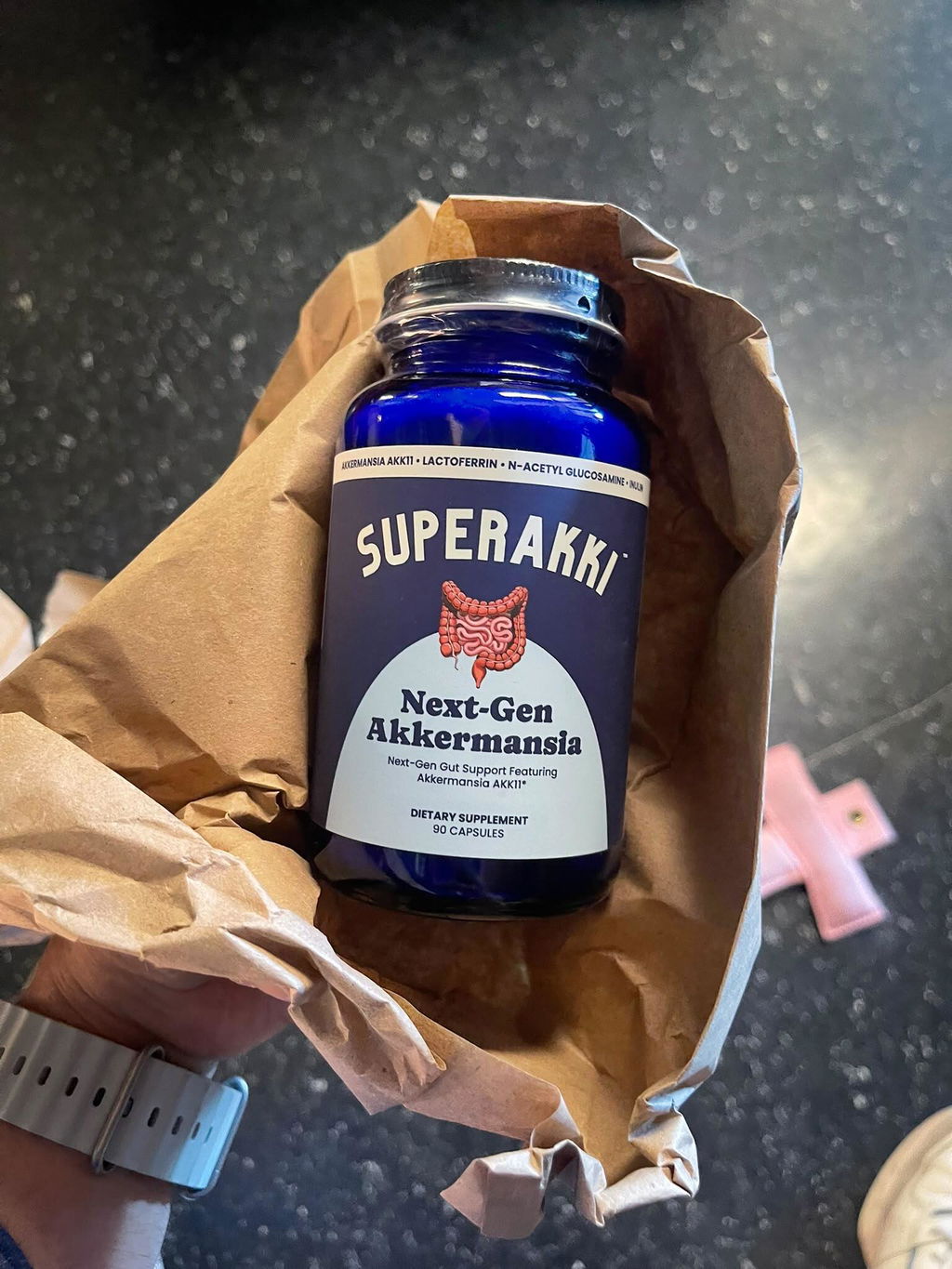
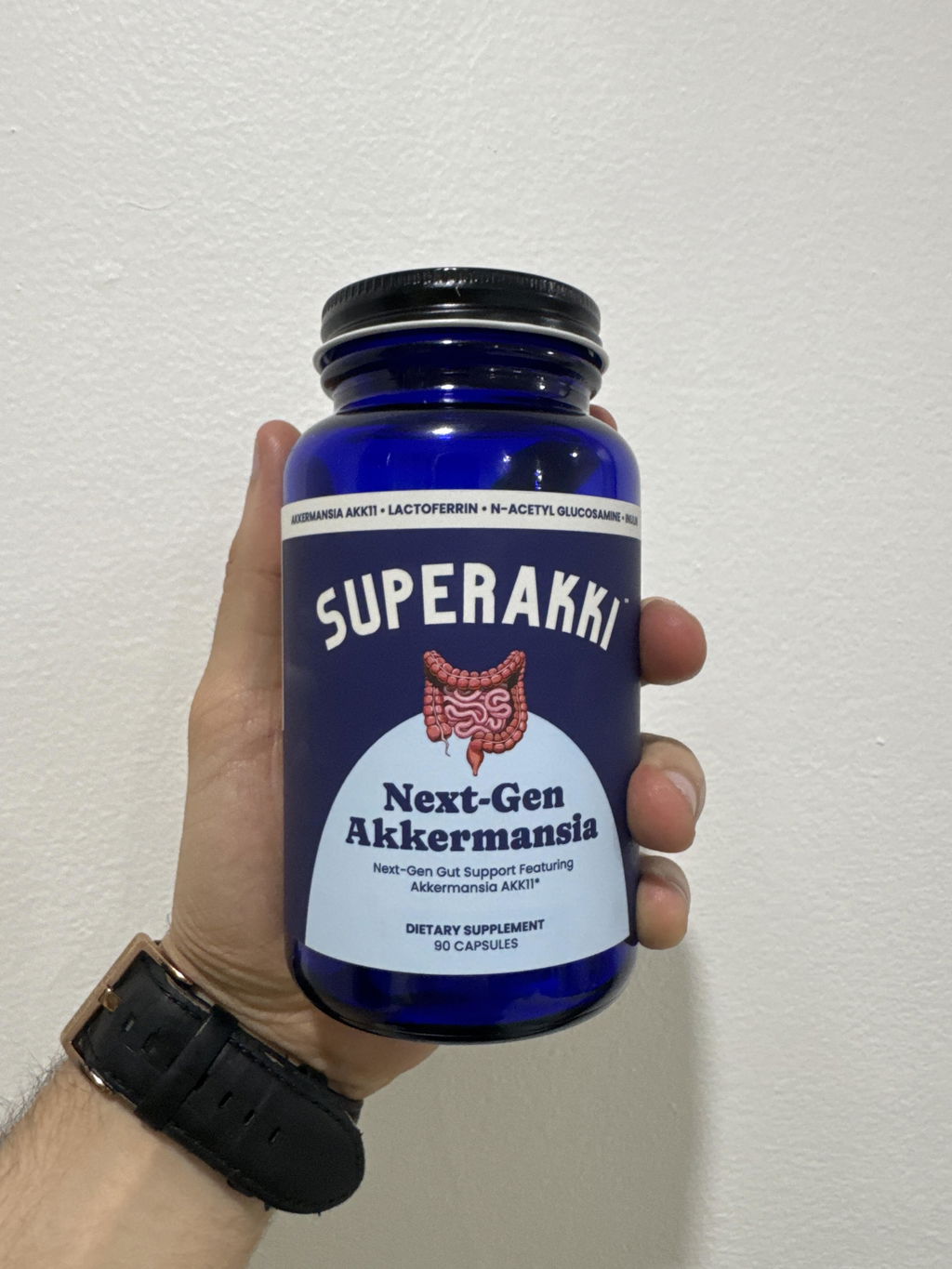
Formulation. For any Akkermansia product, the supporting cast matters, because the gut lining is a system, not a single point of intervention. Ingredients like N-acetyl-D-glucosamine, a building block of the mucin glycoproteins that make up the mucus layer, lactoferrin, a milk protein studied in the context of digestive comfort and microbial balance, and a gentle prebiotic fiber each support the gut environment in their own way. There is a reason this kind of coordinated stack is gaining ground: a 2026 study in Nutrients found that combining structurally distinct gut-barrier bioactives produced additive support for barrier integrity in a laboratory model, with the combination outperforming either ingredient alone. A coordinated stack tells a more complete story than a single ingredient sitting at the dose minimum.

The takeaway
The ‘live equals better’ instinct was reasonable when probiotics first reached the mainstream. For most lactobacilli and bifidobacteria, it still holds. For Akkermansia, the science has moved, and the reason is mechanical rather than rhetorical.
The active piece of Akkermansia muciniphila, the surface protein its gut-barrier benefits trace back to, is heat-stable. Pasteurization inactivates the cell while leaving that protein intact, which means the pasteurized form delivers the exact surface biology the gut lining is built to respond to, on a preparation that is practical to manufacture, ship, and store without compromising what you actually want delivered. It is backed by the first human trial of the ingredient, by formal safety assessments from EFSA and others, and by strain-specific work on Akk11.
‘Dead’ is not a downgrade. It is a deliberately inactivated, well-characterized preparation of a strict anaerobe, chosen on purpose. That is not a marketing pitch. It is just what the molecular biology of Akkermansia looks like when you read it carefully.
References
- Plovier H, Everard A, Druart C, et al. (2017). A purified membrane protein from Akkermansia muciniphila or the pasteurized bacterium improves metabolism in obese and diabetic mice. Nature Medicine, 23(1), 107–113.
- Depommier C, Everard A, Druart C, et al. (2019). Supplementation with Akkermansia muciniphila in overweight and obese human volunteers: a proof-of-concept exploratory study. Nature Medicine, 25(7), 1096–1103.
- Salminen S, Collado MC, Endo A, et al. (2021). The International Scientific Association of Probiotics and Prebiotics (ISAPP) consensus statement on the definition and scope of postbiotics. Nature Reviews Gastroenterology & Hepatology, 18(9), 649–667.
- EFSA Panel on Nutrition, Novel Foods and Food Allergens (NDA); Turck D, et al. (2021). Safety of pasteurised Akkermansia muciniphila as a novel food pursuant to Regulation (EU) 2015/2283. EFSA Journal, 19(9), e6780. (See also Commission Implementing Regulation (EU) 2022/168, and the EFSA extension-of-use opinion, EFSA Journal, 2025, 23(9), e9632.)
- Wang, et al. (2025). Strain-specific safety evaluation of Akkermansia muciniphila Akk11: comprehensive genotypic, phenotypic, and toxicological assessment. Food Science & Nutrition. doi:10.1002/fsn3.71154.
- Feng S, Wang W, Zhang X, Helal SE, Peng N, Zhang Z. (2025). Investigating the role of Akkermansia muciniphila Akk11 in modulating obesity and intestinal dysbiosis: a comparative study of live and pasteurized treatments. Frontiers in Microbiology, 16, 1638771.
- De Beul E, Heyse J, Jurgelewicz M, Baudot A, Vu LD, Van den Abbeele P. (2026). N-Acetylglucosamine and immunoglobulin strengthen gut barrier integrity via complementary microbiome modulation. Nutrients, 18(2), 210.